

Crash Game Casino: How Casino Crash Games Work
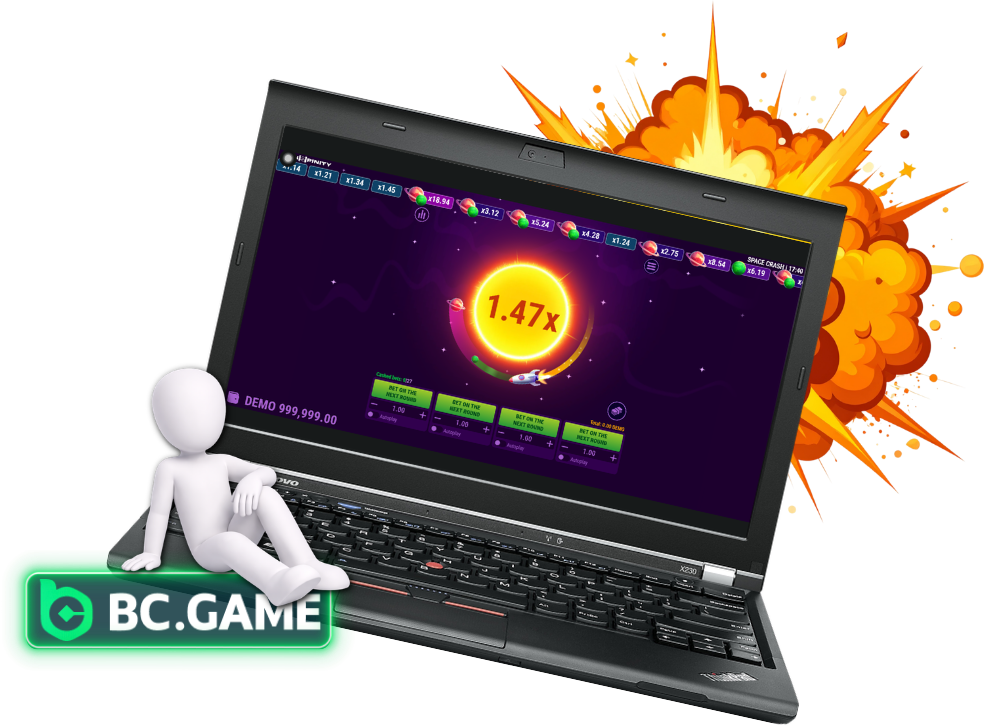
In practice, a crash game casino process is straightforward: a multiplier rises over time until it crashes, and your bet wins only if you cash out before the crash, see crash game casino for the platform-specific flow.
Licensing, registration, and KYC timing at a crash game platform
Crash games are usually offered under the same licensing and compliance framework as the rest of an online casino. The practical meaning for you is that the operator must apply KYC checks, enforce responsible gambling controls, and process withdrawals according to the regulator’s requirements. The exact regulator depends on the operator’s license, so the first step is to verify the license page inside the account area before depositing. In most cases, the crash game section uses the same account balance, limits, and verification status as other casino categories.
Registration steps and required data
Registration typically starts with an email address and a password, then moves to personal details such as name, date of birth, and country of residence. After that, the account needs verification readiness: you must provide contact information that matches your documents. Some operators also ask for a phone number via SMS during signup, but the core identity fields remain the same. In practice, completing registration does not always mean full identity verification is done immediately, so a withdrawal can still be blocked until KYC passes.
KYC documents and verification timeframes
KYC is commonly completed using an ID document plus proof of address, and the exact accepted formats are listed in the verification checklist. Typical document set includes a government-issued ID (passport, national ID, or driving license) and a recent utility or bank statement showing your name and address. Verification timeframes vary by operator and workload, but many platforms process KYC within a defined range such as 24–72 hours after submission. Notably, if documents are rejected for mismatch or low image quality, the clock effectively restarts when a corrected file is uploaded.
- Document set: passport or national ID plus a proof of address statement (utility or bank), submitted for KYC checks
- Age control: date of birth required during signup to enforce the 18 rule
- Verification timeframe: commonly 24–72 hours after upload, depending on document quality
- Account data match: name and address must match the proof of address document
- Withdrawal gating: first withdrawal may require completed verification before processing
Bonuses for crash games: exact terms, wagering, and limits
Bonus terms for crash games are usually tied to the same wagering rules as the rest of the casino section, but the qualifying games can be more specific. A key point is that the bonus amount and the wagering multiplier determine how quickly the bonus balance can be turned into withdrawable funds. Operators often set a maximum bet size during wagering, which matters because crash games rely on a single bet per round. If that cap is lower than the stake you normally use, the wagering progress can slow even when you cash out frequently.
Welcome bonus structure and wagering requirement
For this operator, the welcome offer is a bonus of 100% up to €200, with a wagering requirement of x50. The minimum qualifying deposit is €10, and the time limit to complete wagering is 7 days from bonus activation. During wagering, the maximum bet that counts toward the requirement is €5 per crash round. Qualifying games are typically restricted to the crash game category only, so betting outside that category may not move wagering progress.
Worked scenarios: how wagering behaves in real rounds
Scenario 1: if the welcome bonus is €200 and the x50 wagering applies, total wagering needed becomes €10,000. If the maximum qualifying bet is €5 per round, the number of qualifying rounds can be large, and progress depends on whether each bet is counted within the stake cap. Scenario 2: if a deposit of €10 triggers the minimum qualifying threshold, the bonus may still be capped by the “up to €200” limit, so the exact bonus credited matters for the final wagering target. Scenario 3: if cashing out early produces wins, those wins may still stay in wagering status until the x50 requirement is met, while non-qualifying games may not contribute.
Bonus wagering is time-bound, so a fast start usually matters more than occasional sessions. However, the maximum bet cap during wagering means that “larger stake” strategies may not accelerate qualifying progress if they exceed the €5 limit.
Payments for withdrawals: methods, limits, processing time, and fees
Payment options for crash game casino accounts usually include both card and electronic methods, while the allowed methods depend on your country. Deposit and withdrawal limits are enforced at the account level, so changing payment methods can affect what is available. Processing time is also method-dependent, with some withdrawals handled faster than others once verification is complete. Fees can apply on either deposits or withdrawals, so the fee schedule in the payment section is the place to confirm what will be charged.
Deposit and withdrawal limits, and whether KYC is required
Withdrawal rules often require completed verification before the first cashout, especially when larger amounts are involved. The operator may allow deposits before KYC, but withdrawals can be paused until identity and address checks pass. Minimum and maximum deposit limits vary by payment method, so the payment page should be checked for the current floors and ceilings, with details in mind. If a withdrawal is submitted while verification is pending, the status can remain “processing” longer than the usual timeframe.
Named payment methods and typical processing time
Common methods include Visa, Mastercard, and bank transfer, plus e-wallet options such as Skrill or Neteller where supported. Some operators also enable crypto withdrawals, but only if the account’s compliance checklist allows it. Processing time ranges from “instant” for certain e-wallets to 1–3 business days for bank transfers, depending on the operator’s payout batch schedule. Withdrawal fees, if any, are usually displayed per method and can differ between cards and bank transfers.
- Deposit methods commonly include Visa and Mastercard cards
- E-wallet options often include Skrill and Neteller where available
- Bank transfer is listed as a payout method with method-dependent processing time (often 1–3 business days)
- Withdrawal gating: first withdrawal may require completed KYC verification before processing
- Fees can apply per payment method; confirm the fee schedule in the payments section before withdrawing
Crash game casino gameplay: multipliers, providers, and what to expect
Crash games are typically built around a multiplier that increases from 1.00x upward until a crash point is triggered. Each round accepts a single stake, and the outcome depends on whether you press cash out before the crash. Live tables are usually not used in the same way as live roulette; instead, “live” may refer to real-time game state and streaming of the crash result. As a result, your timing is the main variable, not the number of players at a table.
Game catalog: provider count, titles, and live tables
Game availability depends on the operator’s integration, and the crash category is often powered by specific providers. For this guide, the crash offering is delivered through a defined set of providers, with a limited number of crash titles rather than dozens of unrelated games. Live tables, if present, are usually limited to real-time crash sessions rather than full casino live studios. Categories are typically separated into Crash and sometimes Lightning/Instant multiplier variants, while other casino categories remain separate.
Two practical cash-out scenarios with multipliers
Scenario 1: stake €5, cash out at 2.00x, and the payout is €10 before any bonus balance rules apply. Scenario 2: stake €5 but cash out at 1.20x, producing a smaller return, which changes how quickly wagering requirements progress when bonus terms are active. If the platform sets a maximum bet for qualifying wagering (for example, €5), the stake must stay at or below that cap to count toward the x50 requirement. In practice, the “feel” of crash gameplay is less about strategy against opponents and more about how consistently you execute cash-out timing.
Sports betting controls alongside crash games: odds, margin, cash out, and accumulators
Some crash game platforms also operate as bookmakers, so sports and crash games can sit under the same account balance and responsible gambling limits. Sports coverage is usually organized by leagues and competition type, with live betting available for events that are currently in progress. The operator’s margin is embedded in the odds, meaning the displayed prices already reflect the bookmaker’s pricing model. Odds format is typically decimal on mainstream markets, and live odds can move quickly as team events change.
Leagues, live betting, cash out, and accumulator bonuses
For sports, the platform generally lists top leagues by country and competition level, then adds live fixtures as matches start. Live betting supports in-play updates, so odds and available markets can change during the event. Cash out is often offered on qualifying bets, letting you close a bet early for a cash value that depends on current prices and event status. Accumulator bonuses may be available with defined eligibility rules, such as requiring a specific number of legs and using qualifying markets only.
Mobile access: Android app, iOS app, and mobile browser
Mobile access usually comes via an Android APK, an iOS app, and a mobile browser fallback. The main differences from desktop are screen size constraints, faster navigation to the latest crash rounds, and potentially different default limits for stake selection. Some operators also adjust the way cash-out buttons behave on small screens to reduce mis-taps, which matters for crash timing. In practice, the wager amount and maximum bet limits remain enforced the same way across platforms.
Support and responsible gambling controls
Support is typically available through live chat, email, and a help center, with hours that are often extended during peak betting periods. Languages supported commonly include English plus additional languages based on the operator’s customer base, and response times vary by channel. Responsible gambling controls are implemented through deposit and loss limits, plus tools like self-exclusion that lock the account for a set period. Age restriction is enforced through date of birth checks, and access requires being 18 .